
NADDC Intensifies Push for Made-in-Nigeria Vehicles
By OZIOMA IWUH · 04/06/2026 12:23 PM · 3 min read
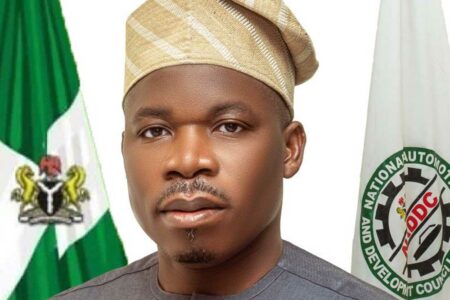
The Director-General of the National Automotive Design and Development Council (NADDC) Oluwemimo Joseph Osanipin, has reaffirmed the Federal Government’s commitment to promoting Made-in-Nigeria and locally assembled vehicles through its public procurement policy, describing the initiative as a strategic step toward strengthening the country’s automotive industry.
Speaking during an interview on Channels Television, Osanipin explained that the policy is designed to encourage government institutions to prioritise vehicles assembled within Nigeria whenever suitable alternatives are available, thereby supporting local manufacturers, preserving jobs and stimulating industrial growth.
According to him, the initiative reflects the Federal Government’s broader objective of building a sustainable automotive ecosystem capable of meeting national demand while reducing dependence on imported vehicles.
Osanipin noted that public institutions, including federal ministries, departments and agencies (MDAs) are expected to align with the policy by considering locally assembled options where they meet operational requirements.
He explained that the guiding principle is not restriction but the promotion of local capacity.
"The idea is simple. Where a suitable alternative exists within Nigeria, preference should be given to that option. This helps to support local production, encourages investment and contributes to economic development," he said.
The NADDC boss stressed that Nigeria's automotive sector has continued to evolve, with several assembly plants and manufacturers expanding their capabilities across different vehicle categories.
He noted that locally assembled vehicles now serve various segments of the market, ranging from passenger cars to commercial and specialised vehicles, making it increasingly possible for government institutions to source their mobility needs within the country.
Speaking on the possibility of extending the policy beyond federal institutions, Osanipin disclosed that the current focus remains on federal MDAs as implementation gathers momentum.
However, he said engagement with state governments and other sub-national entities would form part of the next phase of the initiative.
"We are beginning at the federal level because government procurement presents a significant opportunity to support local industry. As implementation progresses, discussions and collaboration with sub-national governments will naturally follow," he stated.
The Director-General also addressed concerns about the impact of the policy on vehicle importers and dealers, emphasising that the Council is pursuing a collaborative rather than confrontational approach.
According to him, NADDC has strengthened engagement with stakeholders across the automotive value chain, including vehicle dealers and importers, with a view to improving regulation, transparency and industry coordination.
Osanipin revealed that the Council has commenced efforts to register and capture automotive dealers nationwide through a dedicated digital platform, enabling authorities to better understand market activities and establish a more structured operating environment.
He said thousands of dealers have already been integrated into the system as part of broader efforts to enhance industry data and accountability.
"We are building stronger relationships with stakeholders across the sector. Registration and proper documentation help us understand the market, support genuine operators and create a more organised automotive ecosystem," he explained.
Osanipin added that the Council's immediate priority remains the successful implementation of the procurement policy within federal institutions, while laying the groundwork for broader industry participation in the future.
He expressed optimism that increased patronage of locally assembled vehicles would attract additional investments, deepen technology transfer, expand employment opportunities and strengthen Nigeria's manufacturing base.
As Nigeria continues its drive toward industrialisation and economic diversification, the NADDC says sustained support for indigenous manufacturers will remain critical to unlocking the full potential of the automotive industry and positioning the country as a major vehicle production hub in Africa.
Written by
Ozioma Iwuh
SkyHigh NewsHub correspondent.