
Iran’s Supreme Leader Approves US Deal Despite Reservations as Oil Prices Fall
By OUR REPORTER · 19/06/2026 7:17 AM · 5 min read
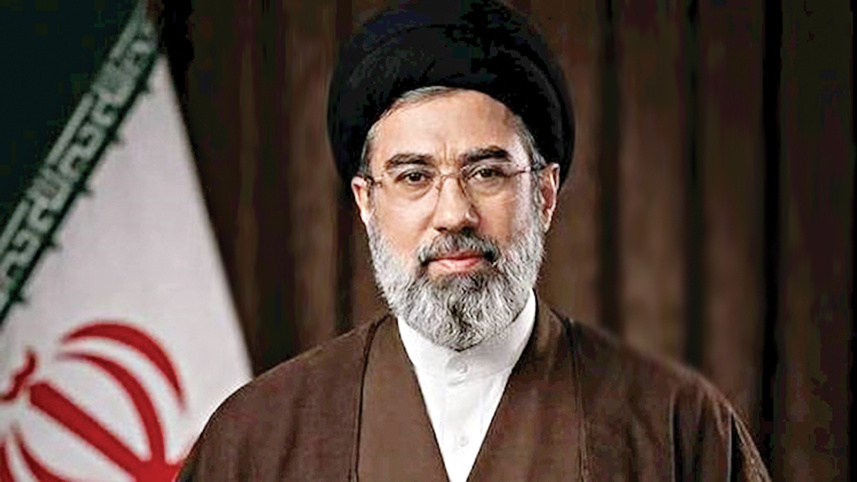
Iran’s Supreme Leader, Ayatollah Mojtaba Khamenei, has said he approved the recently signed agreement with the United States despite personal reservations, as both countries move toward a new phase of negotiations aimed at ending months of conflict and addressing wider disputes, including Tehran’s nuclear programme.
The agreement, signed by US President Donald Trump and Iranian President Masoud Pezeshkian, establishes a 60-day framework for negotiations between the two long-time adversaries and is intended to formally end the Middle East conflict that erupted earlier this year.
However, uncertainty remains over how the process will unfold, with officials yet to confirm whether a planned signing ceremony and technical negotiations in Switzerland will proceed as originally scheduled.
The announcement of the agreement triggered a fresh decline in global oil prices, as investors responded positively to prospects of reduced tensions in one of the world’s most strategically important energy regions. Although maritime activity in the Strait of Hormuz remains below normal levels, movement through the waterway has gradually resumed following commitments contained in the agreement.
In a written statement released on Thursday, Khamenei said he authorised the deal despite holding a different view on aspects of the agreement.
“But I issued my permission due to the commitment” made by government officials, including President Pezeshkian, to safeguard the rights and interests of the Iranian people, he said.
The supreme leader also indicated that direct negotiations with the United States would continue in the future but stressed that engagement should not be interpreted as acceptance of Washington’s positions.
“Face-to-face negotiations” with the United States would take place, he said, but that did not mean “accepting the enemy’s point of view.”
The remarks mirror the approach often taken by his father and predecessor, Ayatollah Ali Khamenei, who frequently authorised negotiations with Western powers while publicly maintaining a cautious stance. Mojtaba Khamenei assumed the position of supreme leader following the death of his father in an airstrike on the opening day of the conflict on February 28.
The new leader, who was reportedly wounded during the conflict, has largely remained out of public view since his appointment. Analysts say ceremonies planned for his father’s funeral in July may offer the first significant public glimpse of Iran’s new leadership structure.
SkyhighNewshub reported June 18 that the US military confirmed it had lifted its naval blockade of Iranian ports, a move expected to facilitate the restoration of maritime trade and energy exports.
American officials said US naval assets would remain in the region despite the easing of restrictions. Shipping activity began Thursday. Maritime tracking services reported three Saudi oil tankers transited the Gulf through the Strait of Hormuz, while a liquefied natural gas vessel became the first French LNG carrier to pass through the strategic waterway since the conflict began.
Iranian authorities also announced a new regulatory framework for vessels seeking passage through the strait. According to Iranian state television, ships must now submit requests to a government body tasked with overseeing operations in the waterway.
Officials said that in line with the agreement, no fees would be charged for passage during the initial 60-day negotiation period.
US Vice President JD Vance said he expected to travel to Switzerland for technical negotiations with Iranian officials later this weekend, although he acknowledged that plans could still change.
In Tehran, however, officials appeared more cautious. Iranian media reported that no final decision had been made regarding the country’s participation in the proposed talks. The agreement effectively formalises the ceasefire that ended five weeks of intense conflict involving Iran, the United States and Israel.
Despite the diplomatic breakthrough, doubts persist about whether the peace will hold. Many Iranians remain sceptical about the prospects for a lasting settlement.
“I have no hope that this is a lasting agreement. Maybe after the 60 days they start fighting again,” said Mina, a 54-year-old psychologist in Tehran.
French President Emmanuel Macron, who hosted the signing ceremony at the Palace of Versailles, also urged caution, saying he did not believe the conflict was “totally finished.”
Under the terms of the agreement, Washington has committed to lifting oil sanctions that have severely constrained Iran’s economy. The deal also provides for the possible creation of a $300 billion reconstruction fund backed by regional partners once a final agreement on Iran’s nuclear programme is reached.
However, the agreement has generated criticism from some quarters in the United States.
Republican Senator Bill Cassidy described the accord as a major foreign policy mistake, arguing that Iran’s nuclear ambitions had not been sufficiently addressed.
President Trump defended the agreement, insisting that it represented a significant achievement and warning that military action remained an option if Iran failed to honour its commitments.
“If they don’t behave, we’ll go right back to dropping bombs,” Trump said during discussions surrounding the agreement.
Within Iran, reactions have also been mixed.
Parliament Speaker and chief negotiator Mohammad Bagher Ghalibaf described the outcome as evidence of a US failure, while President Pezeshkian hailed the agreement as a historic development.
Regional analysts say the accord reflects a broader desire among international stakeholders to stabilise the Gulf region and secure uninterrupted access to global energy supplies.
Agnes Lavallois, President of France’s Institute for Research and Studies on the Mediterranean and the Middle East, said the overriding priority for Washington appeared to be ensuring the reopening of the Strait of Hormuz and restoring confidence in global energy markets.
Whether the agreement evolves into a durable peace framework or merely a temporary pause in hostilities may ultimately depend on what both sides achieve during the next 60 days of negotiations.
AFP
Written by
Our Reporter
SkyHigh NewsHub correspondent.