
House of Reps Introduces 2,747 Bills, Passes 363 in Three Years, Defends Legislative Record
By OUR REPORTER · 06/07/2026 7:28 PM · 4 min read
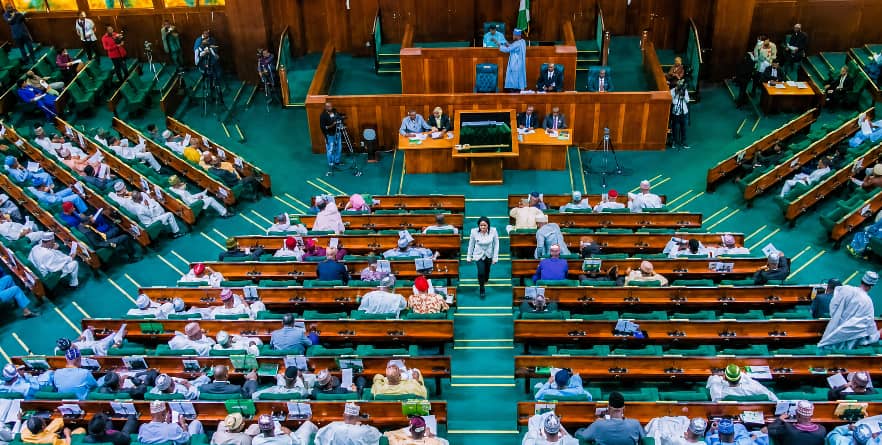
The House of Representatives has revealed that lawmakers introduced 2,747 bills and successfully passed 363 within the first three years of the 10th National Assembly, describing the period as one of the most productive legislative sessions since Nigeria's return to democratic rule.
The figures were unveiled on Monday during a review of the House's legislative activities at the close of its third session, as members assessed their performance since assuming office in June 2023.
Chairman of the House Committee on Rules and Business, Francis Waive, said the volume of bills reflected the House's determination to strengthen Nigeria's legal framework, address emerging national challenges and improve governance through legislation.
According to him, the 2,747 bills introduced since the inauguration of the Assembly comprise 57 Executive Bills, 95 concurrence bills transmitted by the Senate and 2,595 private members' bills sponsored by lawmakers.
Waive said the House passed 89 bills during its first legislative session, 148 in the second session, and 126 during the just-concluded third session, bringing the total to 363 bills.
Third session activities
Providing a breakdown of activities during the third legislative year alone, Waive disclosed that lawmakers introduced 484 bills, made up of 31 Executive Bills, 391 private members bills and 62 concurrence bills from the Senate.
Beyond lawmaking, he said the House debated 220 motions, with 192 referred to standing committees for further legislative action and 28 assigned to ad hoc committees.
He added that 121 motions were admitted as matters of urgent public importance, while lawmakers also considered 48 public petitions submitted by individuals and organisations.
Among the major legislative measures passed during the period, Waive listed the 2026 Appropriation Bill, the Electoral Act 2026, constitutional amendment proposals providing the legal framework for state police, tax reform legislation and the Minimum Wage Act.
According to him, the legislation was designed to improve governance, strengthen public institutions and promote the welfare of Nigerians.
"We are sharing this data with Nigerians because the House of Representatives is working. This is the scorecard for the session," Waive said.
House rejects inducement allegation
The House also dismissed allegations that lawmakers pay money to have bills listed for legislative consideration.
Waive explained that comments recently made by one of the lawmakers had been misinterpreted, stressing that the lawmaker was referring to the consultations, advocacy and consensus-building required to move legislation through the parliamentary process, not financial inducement.
Supporting the clarification, House spokesman Akin Rotimi said he had personally sponsored more than 40 bills, insisting that the legislative process remains transparent and is guided strictly by constitutional provisions and the House Standing Orders.
He explained that every bill undergoes established parliamentary procedures before progressing through first reading and subsequent legislative stages.
Rotimi also argued that legislative productivity should not be judged solely by comparing the number of bills introduced with those eventually passed.
According to him, several bills addressing similar issues are often harmonised into a single piece of legislation before final passage, resulting in fewer enacted bills than those initially proposed.
He further disclosed that lawmakers have introduced more than 300 constitutional amendment proposals, many of which are currently progressing through different legislative stages.
"We've covered a lot of ground, but there is still a lot more to do," Rotimi said.
"We are reviewing our legislative agenda internally to ensure that key promises made to Nigerians are delivered before the end of this Assembly."
Committee clarifies role on presidential assent
Responding to questions on bills awaiting presidential assent, Waive clarified that the Committee on Rules and Business does not maintain records of legislation signed into law by the President.
He explained that once a bill has been passed by both chambers of the National Assembly, responsibility for transmitting it to the Presidency rests with the Clerk of the National Assembly, while the assent process is handled outside the committee.
Similarly, he noted that concurrence bills exchanged between the House and Senate are processed through the Clerk after passage.
Defence of establishment bills
Waive also defended the growing number of establishment bills seeking to create new federal institutions, dismissing criticisms that lawmakers were introducing such bills merely to boost legislative statistics.
He argued that many of the approved bills have resulted in the establishment of federal institutions, including Federal Medical Centres and other public facilities that have expanded access to government services across the country.
State police, constitutional reforms remain priorities
On the proposed creation of state police, Waive said the constitutional amendment already approved by the House merely provides the legal foundation for state-controlled policing.
He explained that a separate amendment to the Police Act would be required to define operational issues, including command structure, oversight responsibilities and coordination between state police formations and the Nigeria Police Force.
Looking ahead to the fourth legislative session, Rotimi disclosed that lawmakers are expected to vote on about 40 constitutional amendment bills, including proposals to create reserved legislative seats for women, strengthen democratic institutions and implement broader governance reforms.
He said the House remains committed to concluding priority constitutional amendments before the expiration of the 10th National Assembly.
Written by
Our Reporter
SkyHigh NewsHub correspondent.