
FG Launches Nigeria AI Hub, Unveils $7.5m Fund to Drive Public Sector Innovation
By OUR REPORTER · 27/06/2026 8:29 AM · 4 min read
The Federal Government has launched the Nigeria Artificial Intelligence Scaling Hub (NAISH) and unveiled a new $7.5 million initiative aimed at accelerating the adoption of artificial intelligence across public institutions, in what officials describe as a major step towards positioning Nigeria as Africa's leading AI innovation hub.
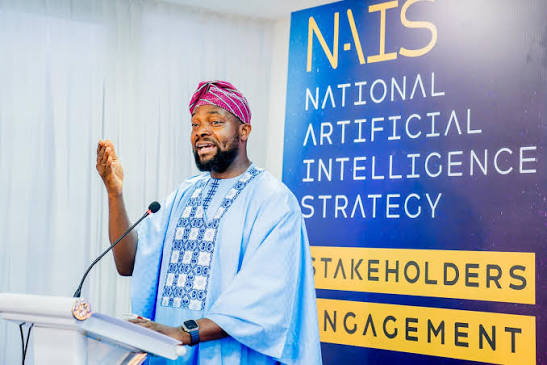
The initiative, launched on Friday in Abuja by the Minister of Communications, Innovation and Digital Economy, Dr. Bosun Tijani, is designed to bridge the gap between government institutions and local AI innovators by supporting the large-scale deployment of proven artificial intelligence solutions capable of addressing critical national development challenges.
Backed by a $7.5 million commitment from the Gates Foundation, the programme will provide technical assistance, computing infrastructure, policy support and strategic partnerships over the next three years to help move promising AI innovations beyond pilot stages into nationwide implementation.
Speaking at the unveiling, Tijani said Nigeria's ambition extends beyond developing artificial intelligence applications to building a thriving ecosystem capable of producing globally competitive technology companies.
He noted that Nigeria's fintech success was driven by coordinated collaboration among government, regulators, financial institutions, academia and development partners, rather than the efforts of entrepreneurs alone.
"The only technology that has been extremely successful in Nigeria is financial technology and many people assume it was simply because of brilliant founders. That was not the case," the minister said.
"The success of fintech came from coordinated investments involving government, regulators, financial institutions, academia and development partners."
According to him, the government intends to replicate the same collaborative model in the artificial intelligence sector, with particular focus on healthcare, education and agriculture.
"The day we build the same kind of open ecosystem for health and education is the day we begin to see AI innovations that are unique to Nigeria and capable of solving our own development challenges," he added.
Tijani explained that the Nigeria AI Scaling Hub forms part of the Federal Government's broader strategy to strengthen the country's artificial intelligence ecosystem through sustained investments in digital infrastructure, research, high-performance computing capacity, fibre connectivity, national data platforms and digital skills development.
As part of the initiative, innovators selected for the programme will receive free access to Nigeria's national AI computing infrastructure during the initial phase, significantly lowering the cost of developing and training AI models.
The minister also announced the launch of the Scaling AI for Development (SAID) Challenge, a national programme that will identify mature AI solutions developed by Nigerian innovators and connect them with government institutions seeking technology-driven solutions in healthcare, education, agriculture and public administration.
Successful innovators will undergo a competitive selection process before their solutions are deployed across relevant public sector institutions.
Earlier, the Dean of Lagos Business School and Director of NAISH, Professor Olayinka David-West, said the hub would help government agencies identify problems suitable for AI solutions while providing startups with practical opportunities to deploy their innovations at scale.
She added that the initiative would also provide access to local AI computing infrastructure, reducing reliance on expensive foreign cloud service providers and making it more affordable for Nigerian innovators to build advanced AI models.
The Nigeria Country Director of the Gates Foundation, Uche Amaonwu, said the true value of artificial intelligence should be measured by its ability to improve lives rather than by the sophistication of the technology itself.
Amaonwu stressed the importance of developing locally trained AI models capable of reflecting African realities, languages and operating environments, noting that many global AI systems do not adequately address the continent's unique needs.
According to him, artificial intelligence has enormous potential to improve learning outcomes through personalised education, strengthen maternal healthcare services and expand access to agricultural finance using more effective data-driven credit assessments.
Stakeholders at the launch agreed that the long-term success of the initiative will depend on Nigeria's ability to move beyond isolated AI pilot projects and scale practical innovations that deliver measurable improvements in public service delivery.
They expressed optimism that the Nigeria AI Scaling Hub would not only accelerate digital transformation across government institutions but also position the country as a continental leader in artificial intelligence innovation, creating solutions tailored to Africa's unique development challenges while strengthening Nigeria's growing digital economy.
Written by
Our Reporter
SkyHigh NewsHub correspondent.