
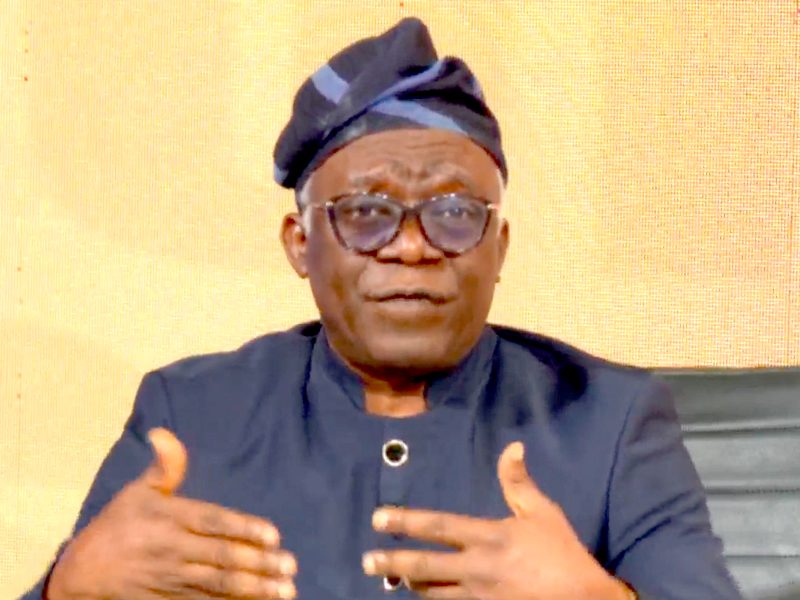
Falana: State Police Won’t Solve Nigeria’s Insecurity Without Jobs, Poverty Reduction
By OUR REPORTER · 26/06/2026 6:58 PM · 3 min read
Human rights lawyer and Senior Advocate of Nigeria (SAN), Femi Falana, has cautioned that establishing state police will not, on its own, solve Nigeria's growing insecurity unless governments at all levels address the underlying issues of poverty, unemployment and social inequality.
Falana made the remarks on Thursday during an appearance on Politics Today, a current affairs programme on Channels Television, as debate intensifies over the National Assembly's approval of constitutional amendments to establish state police.
According to the senior lawyer, Nigeria's security crisis is often viewed too narrowly through the lens of policing and security architecture while ignoring the socioeconomic conditions that drive many young people into criminal activities.
"We always reduce the problem of insecurity to security architecture, in fact structure. How do we have more police stations? How do we employ more policemen and women without considering social security?" Falana said.
He argued that meaningful security reform must include deliberate policies aimed at creating employment opportunities and expanding social protection for vulnerable Nigerians.
"Why are more young men taking to criminality? Why are we not talking about creating employment for young people? Why are we not giving assistance to Nigerians that are vulnerable, extremely poor or dimensionally poor?" he asked.
"And unless you address these problems holistically, creating a state police or local government police will not address the crisis of insecurity in the country."
His comments come days after President Bola Tinubu transmitted a Constitution Alteration Bill to the Senate seeking to establish state police services across the federation as part of broader constitutional reforms.
The Senate on Wednesday passed the bill after considering it clause by clause, while the House of Representatives had earlier approved the proposal. If eventually ratified by at least two-thirds of the 36 state Houses of Assembly and signed into law by the President, Nigeria will operate a dual policing system comprising the Federal Police Service and State Police Services.
Under the proposed arrangement, governors will have the power to appoint commissioners of police for their respective states, subject to confirmation by state Houses of Assembly. Lawmakers also included provisions intended to safeguard civil liberties and reduce the risk of political interference.
However, Falana said Nigeria had previously operated a decentralised policing structure during the First Republic before it was abolished due to widespread abuse by regional political authorities.
He stressed that those historical concerns must be addressed before the country returns to a similar system.
"If we now want to go back to the status quo ante bellum, we must ask questions. The fears that were entertained, the problem that led to the abolition of the dual policing system, have they been taken care of?" he said.
"I haven't seen any signs. I have seen the bill passed by both chambers of the National Assembly. The bill is so sketchy."
Falana also questioned whether many states possess the financial capacity to maintain independent police services, noting that several state governments already struggle to meet basic obligations such as salary and pension payments.
He further warned that without strong constitutional safeguards, state police could become vulnerable to political manipulation and abuse by state governments.
The debate over state police has intensified in recent weeks, with supporters arguing that decentralised policing would improve intelligence gathering and enable quicker responses to local security threats. Critics, however, have expressed concerns over funding, accountability and the potential misuse of state-controlled security agencies against political opponents.
Falana maintained that while policing reforms are important, lasting security can only be achieved by tackling the economic and social conditions that fuel criminality across the country.
Written by
Our Reporter
SkyHigh NewsHub correspondent.