
'Enough Is Enough': Senate Considers Diplomatic Action Over Killings of Nigerians in South Africa
By OUR REPORTER · 07/07/2026 2:29 PM · 3 min read
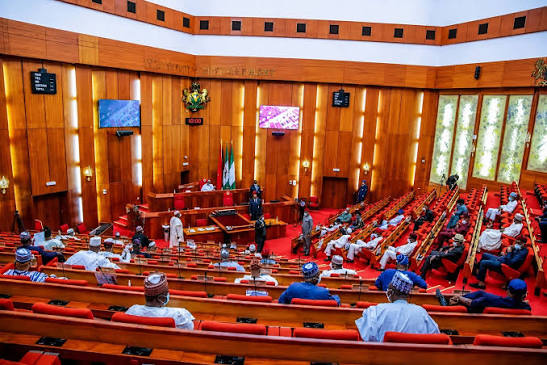
The Senate on Tuesday ordered a fresh investigation into the renewed wave of xenophobic attacks against Nigerians in South Africa, warning that continued violence against Nigerian citizens could attract far-reaching diplomatic and economic consequences.
Lawmakers also debated proposals ranging from the severance of diplomatic relations with South Africa to the nationalisation of South African-owned businesses operating in Nigeria. However, the Senate deferred consideration of those measures pending the outcome of an investigation by its Committee on Foreign Affairs.
The resolution followed a motion sponsored by the Chairman of the Senate Committee on Foreign Affairs, Senator Asuquo Ekpenyong, under Orders 41 and 51, condemning the escalating attacks, harassment, intimidation, forced displacement and destruction of businesses owned by Nigerians and other African nationals in South Africa.
Leading the debate, Ekpenyong said recent anti-migrant protests and activities of vigilante groups had created fear among foreign nationals, including Nigerians legally residing in South Africa.
He noted that groups campaigning against undocumented migrants had issued an ultimatum directing foreigners to leave the country by June 30, 2026, triggering demonstrations, attacks on foreign-owned businesses and widespread insecurity.
According to the senator, the violence has extended beyond undocumented migrants, with Nigerians holding valid work and residence permits also reportedly subjected to profiling, harassment, intimidation and forced evictions.
He argued that the attacks had evolved beyond immigration enforcement into outright xenophobia directed at people because of their nationality.
Ekpenyong reminded lawmakers of Nigeria's historical role in supporting South Africa's liberation from apartheid, recalling the country's diplomatic, financial and material contributions to the anti-apartheid struggle.
He also referenced Nigeria's previous economic actions against apartheid-era interests, including the nationalisation of British Petroleum's Nigerian assets and pressure mounted against Barclays Bank during that period.
The senator expressed concern that while Nigerian-owned businesses in South Africa had been looted, abandoned or forced to shut down, South African companies continued to operate profitably in Nigeria.
He urged the Federal Government to seek firm guarantees from the South African government on the protection of Nigerians, demand the arrest and prosecution of perpetrators, strengthen consular support for affected citizens, compile a verified register of victims for restitution and compensation, engage the African Union on preventive measures and review Nigeria's bilateral engagements with South Africa.
During the debate, several senators argued that repeated condemnations had failed to stop the attacks.
Senate Chief Whip, Senator Tahir Monguno, supported the motion, stressing that Nigeria's foreign policy should prioritise the protection of its citizens wherever they reside.
"Our diplomatic engagements across the world should be citizen-centred and citizen-driven in order to jealously guard and protect the lives and properties of Nigerians wherever they may be on the surface of the earth," he said.
Senator Abdul Ningi of Bauchi Central said the country could no longer rely on verbal condemnations while Nigerians continued to lose their lives.
"Nigerians are being killed left, right and centre. There has never been any action except to condemn this thing by mouth," he said.
"Enough is enough. Silence is no longer golden."
Ningi urged the Federal Government to consider severing diplomatic relations with South Africa if the attacks persist.
Former Abia State governor and senator representing Abia North, Senator Orji Uzor Kalu, commended President Bola Ahmed Tinubu for facilitating the evacuation of stranded Nigerians but insisted that South Africa should be held accountable for losses suffered by Nigerian citizens.
Recalling Nigeria's support during the anti-apartheid struggle, Kalu said the country had committed significant resources to South Africa's liberation.
"Nigeria spent in excess of 15 billion dollars on South Africa, and they are treating Nigerians like this," he said.
Despite his criticism, Kalu urged the government to pursue diplomatic and legal channels rather than retaliation.
"We are not going to go forcefully; we are going to go with dialogue. We are going to use international laws and the international community to deal with them," he added.
Although some lawmakers proposed the nationalisation of South African companies operating in Nigeriain, including telecommunications operator MTN Group and pay television provider MultiChoice with proceeds to compensate victims, Deputy Senate President Barau Jibrin, who presided over plenary, appealed for the proposals to be stepped down until the Foreign Affairs Committee concludes its investigation.
The Senate subsequently adopted all the substantive prayers of the motion condemning the attacks while mandating the committee to investigate the latest developments and recommend further action.
Written by
Our Reporter
SkyHigh NewsHub correspondent.