
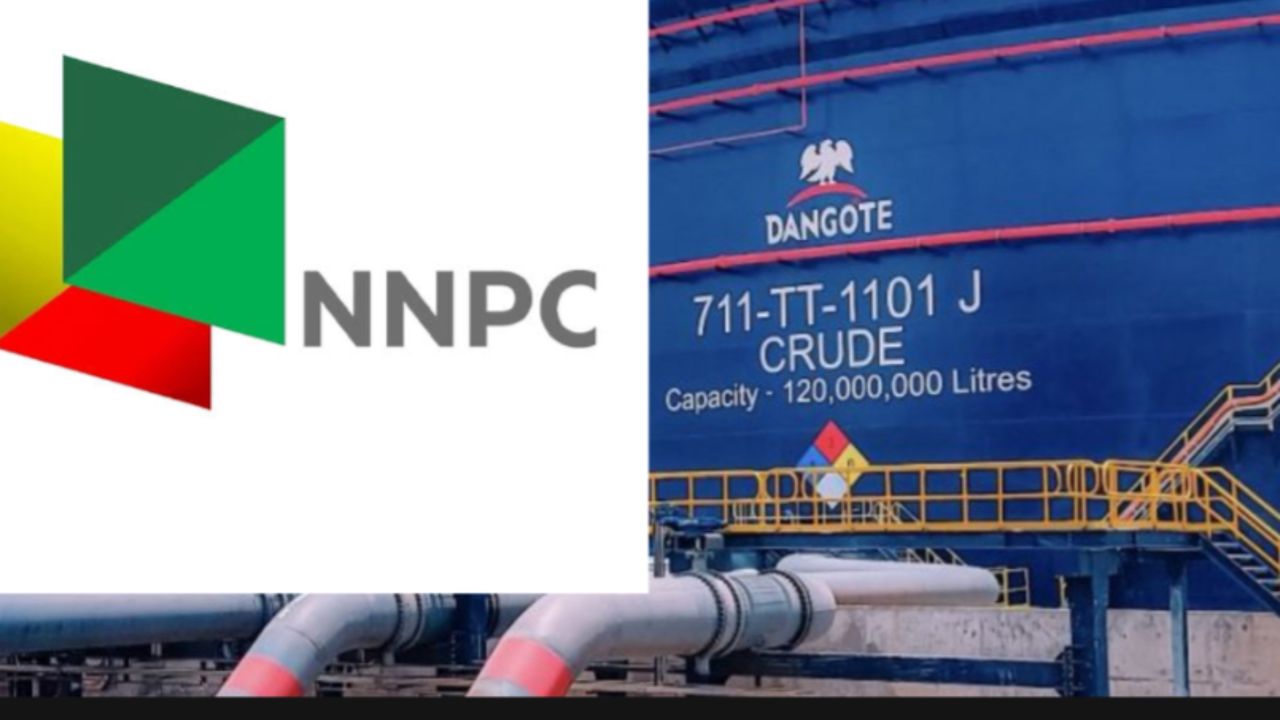
Dangote Refinery, NNPC Locked in High-Stakes Legal Battle Over Fuel Supply
By OUR REPORTER · 23/05/2026 4:37 PM · 5 min read
The intense boardroom and regulatory feud between the state-owned oil giant, Nigerian National Petroleum Company Limited (NNPC Ltd) and the $20 billion Dangote Petroleum Refinery has formally spilled back into the courtroom.
In an explosive legal defense filed before the Federal High Court in Lagos, NNPC Ltd has aggressively accused the management of the 650,000 barrels-per-day Dangote Refinery of actively attempting to lock down a multi-billion dollar monopoly over Nigeria’s volatile domestic fuel market. The state oil firm argued that if the court accedes to Aliko Dangote's fresh legal demands to restrict or outright void fuel import licenses granted to private marketers, the country would instantly be exposed to catastrophic supply disruptions, price manipulation and severe national energy insecurity.
The high-stakes legal development follows less than a month after the Dangote Petroleum Refinery instituted a fresh lawsuit against the Attorney-General of the Federation (AGF) and the federal government. The lawsuit seeks a sweeping judicial order to cancel fuel import permits currently held by independent oil marketers and the NNPC. International media agency Reuters reports that the legal crossfire has expanded rapidly, with the industry regulator, the Nigerian Midstream and Downstream Petroleum Regulatory Authority (NMDPRA), filing an urgent application to join the case as an interested party.
The timing of this litigation has sent shockwaves through the financial sector. The legal warfare directly predates Dangote Refinery’s highly anticipated Initial Public Offering (IPO) scheduled for September 2026, raising serious international concerns regarding market stability, competitive transparency, and the facility’s long-term revenue forecasts.
In its originating court documents, the Dangote Refinery group argued that the continuous issuance of massive fuel import licenses to rival marketers directly sabotages local manufacturing efforts. It insisted that the regulatory approvals violate the core provisions of the Petroleum Industry Act (PIA), a legislation it claims was structurally designed by the National Assembly to explicitly prioritize and insulate domestic refining capacity.
NNPC’s legal team, however, has vehemently pushed back against this interpretation of the law. The state company countered that the PIA clearly empowers the NMDPRA to issue import permits to entities showing a robust international track record in petroleum trading or possessing local refining setups. Furthermore, NNPC argued that under Nigeria's existing backward integration policy, an outright ban on fuel imports can only legally occur when local production independently, consistently and verifiably satisfies the absolute daily volumetric demand of the entire federation.
To drive home its defense, NNPC alleged that Dangote Refinery has conspicuously failed to present any credible, independent or verifiable operational evidence proving it can seamlessly guarantee uninterrupted nationwide fuel supply without the cushion of foreign imports. The state oil firm also took the opportunity to issue a flat denial against allegations that it was deliberately choking Dangote's operations by artificially hoarding or delaying domestic crude oil allocations, maintaining that crude distributions are governed purely by standard commercial, security and logistical frameworks.
Independent fuel marketers have similarly mobilized against the suit, warning that an industry monopoly would instantly trigger sky-high pump prices for everyday Nigerians.
The Bitter Legacy of a Multi-Year Industry Feud
This latest courtroom battle is not an isolated incident; it represents the continuation of a toxic history between Aliko Dangote and the downstream regulatory framework since the refinery commenced initial operations in 2024.
The roots of the current conflict trace back to 2024, when Dangote launched its first major legal assault. In that initial case, marked as suit number FHC/ABJ/CS/1324/2024, the refinery group asked the court to award a staggering N100 billion in damages against the NMDPRA for issuing import licenses to major competitors. That suit specifically targeted major industry players, listing NNPC Ltd, Matrix Petroleum Services Limited, AYM Shafa Limited, A.A. Rano Limited, T. Time Petroleum Limited and 2015 Petroleum Limited as key defendants, with Dangote arguing that such licenses should legally only be granted if a severe domestic product shortfall exists.
The legal friction eventually normalized into a quiet discontinuation in July 2025, when Dangote Refinery withdrew the multi-billion Naira damages suit without publicly explaining its reasons. However, just months after dropping that initial challenge, the refinery group completely reversed course by launching this fresh 2026 lawsuit against the Attorney-General of the Federation, effectively restarting the legal war just as the company prepares for its critical public stock listing.
The friction previously triggered an ugly, highly personalized public feud between Aliko Dangote and the former Chief Executive of the NMDPRA, Farouk Ahmed, who adamantly refused to grant exclusive market control to a single private entity. At the height of the fallout, Dangote accused Ahmed of running a corrupt regulatory regime colluding with international traders to sabotage local industrialization. Dangote went as far as publicly targeting Ahmed's lifestyle, alleging that the regulator was living far beyond his legitimate public means by funding elite schooling for four of his children in Switzerland.
Following intense political pressure and scrutiny over regulatory integrity, Farouk Ahmed eventually resigned from his position.
Despite Dangote Refinery previously backing down in July 2025, the structural issues plaguing the sector remain entirely unresolved. For decades, Africa’s largest economy has spent trillions of Naira on fuel subsidies and foreign exchange allocations due to the systematic collapse of its state-owned refineries.
While the massive 650,000 bpd single-train complex was hailed as the ultimate silver bullet to terminate foreign fuel reliance and save foreign exchange reserves, realities on the ground indicate that petrol imports have stubbornly persisted. Marketers insist that as Dangote continues to iron out its production ramp-up timelines and complex nationwide distribution logistics, an outright block on imports would spell immediate disaster for the country's energy grid. The Federal High Court is expected to set a definitive date to hear arguments on the matter within the coming weeks.
Written by
Our Reporter
SkyHigh NewsHub correspondent.