
Court Declares National Assembly’s N110bn SUV and Allowance Scheme Unlawful
By OUR REPORTER · 07/06/2026 6:13 PM · 4 min read
In a landmark judgment that could reshape public accountability in Nigeria, the Federal High Court in Lagos has declared unlawful the National Assembly’s controversial N110 billion vehicle procurement and allowance scheme for federal lawmakers.
Justice Yellim Bogoro ruled that the proposed expenditure, comprising N40 billion earmarked for the purchase of 465 vehicles and N70 billion allocated as support allowances for newly elected lawmakers, violated procurement regulations, constitutional provisions and principles of public trust.
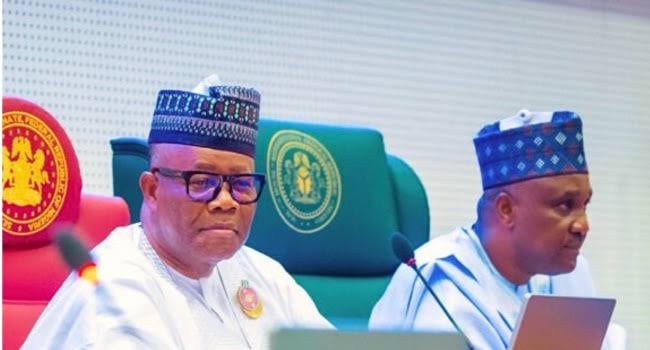
The judgment followed a suit filed by the Socio-Economic Rights and Accountability Project (SERAP) against Senate President Godswill Akpabio and Speaker of the House of Representatives Tajudeen Abbas.
The case, marked FHC/L/CS/1606/2023, challenged the legality and propriety of the spending plans approved shortly after the inauguration of the 10th National Assembly.
Delivering judgment, Justice Bogoro held that lawmakers who approved the expenditure were also its direct beneficiaries, creating a clear conflict of interest that undermined public confidence in governance.
“The beneficiaries of the expenditure are the very officials approving it,” the judge stated.
“This constitutes a case of self-dealing and conflict of interest.”
The court further held that public officials have a fiduciary duty to act in the interest of citizens and not for personal enrichment.
According to the judgment, allocating N110 billion for lawmakers’ welfare at a time when millions of Nigerians are struggling with severe economic hardship demonstrated a failure to prioritise national interest.
Justice Bogoro noted that the court could not ignore prevailing economic realities, stressing that public resources must be managed responsibly and transparently.
“I have taken judicial notice of the economic realities in Nigeria and the widespread financial hardship affecting citizens,” the judge ruled.
“In this context, the allocation of N110 billion for the benefit of lawmakers demonstrates a failure to prioritise national interest.”
The court also dismissed arguments by the National Assembly leadership challenging SERAP’s right to institute the suit. Justice Bogoro ruled that Nigerian law recognises public interest litigation and affirmed that civil society organisations have the legal standing to seek judicial intervention on matters affecting public accountability and governance.
“SERAP has demonstrated sufficient interest because the issues raised are matters of undeniable public concern,” he held.
The court also rejected arguments that the case had become academic because portions of the funds may already have been spent. According to the judgment, courts retain the authority to make declaratory pronouncements where constitutional and legal questions remain unresolved.
On procurement procedures, the court found that the defendants failed to present credible evidence showing compliance with competitive bidding requirements, due process procedures and value-for-money assessments as required under the Public Procurement Act.
Justice Bogoro held that the failure to rebut SERAP’s allegations effectively amounted to an admission of non-compliance.
As part of the judgment, the court ordered the National Assembly leadership to ensure that all future procurement and public spending strictly comply with due process requirements, transparency standards, accountability principles and value-for-money considerations.
The ruling stems from widespread criticism that followed the National Assembly’s decision in 2023 to allocate billions of naira for luxury Sports Utility Vehicles (SUVs) and support packages for lawmakers shortly after the removal of petrol subsidy plunged millions of Nigerians into economic hardship.
At the time, critics argued that the expenditure was insensitive and disconnected from the realities facing ordinary citizens.
Civil society organisations, labour groups and governance advocates repeatedly called for the funds to be redirected towards critical sectors including healthcare, education, social welfare and poverty alleviation.
Reacting to the judgment, SERAP described the ruling as a major victory for transparency, accountability and constitutional governance.
SERAP Deputy Director Kolawole Oluwadare said the judgment reinforces the principle that public office is a public trust and that public resources must be used solely in the public interest.
Human rights lawyer and Senior Advocate of Nigeria, Femi Falana, also welcomed the ruling, saying it sends a strong message that public officials cannot justify extravagant spending while citizens endure economic hardship.
The judgment is expected to reignite debate over the cost of governance in Nigeria and could influence future discussions on legislative spending, public accountability and procurement transparency.
Written by
Our Reporter
SkyHigh NewsHub correspondent.