
China Unveils 5,000 AI Training Opportunities for Developing Nations
By OUR REPORTER · 19/07/2026 11:50 AM · 3 min read
Chinese President Xi Jinping has announced a five-year programme that will provide 5,000 artificial intelligence (AI) training opportunities for developing countries as part of China's efforts to promote inclusive global AI development and narrow the technology gap between advanced and emerging economies.
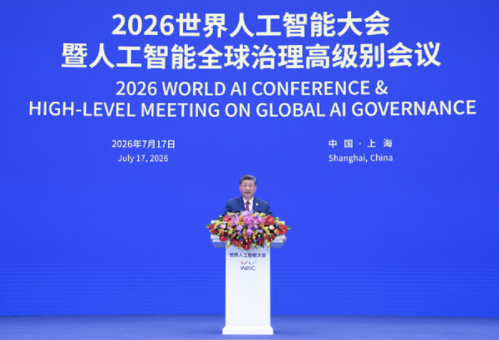
Xi made the announcement on Friday while addressing the opening ceremony of the 2026 World Artificial Intelligence Conference and High-Level Meeting on Global AI Governance in Shanghai.
As part of the initiative, China will also enable 30 developing countries to access its AI-powered meteorological early warning system, MAZU, to strengthen disaster preparedness and improve protection for vulnerable communities.
According to Xi, the new measures are designed to ensure that developing nations are not left behind as artificial intelligence rapidly transforms economies and societies around the world.
He also announced plans to establish international AI application cooperation centres with the Association of Southeast Asian Nations (ASEAN), the African Union (AU), the League of Arab States, the Community of Latin American and Caribbean States (CELAC), the Shanghai Cooperation Organisation (SCO) and BRICS.
Xi said the centres would strengthen AI capacity across the Global South while promoting wider access to emerging technologies.
"AI development should not be a solo performance by a single country, but a symphony of international cooperation," he said.
The Chinese leader also confirmed that the World Artificial Intelligence Cooperation Organisation (WAICO), first proposed by China last year, has now been officially established in Shanghai.
He described the organisation as a major step forward in global AI governance, saying it responds to calls from developing countries for a more inclusive international framework for managing artificial intelligence.
During his address, Xi outlined four guiding principles for global AI governance. He urged countries to promote open innovation, strengthen AI safety and security, encourage inclusiveness and cultural diversity, and improve multilateral governance under the framework of the United Nations.
While highlighting AI's enormous potential to drive economic growth and social development, Xi warned that the technology also presents significant security, ethical and governance challenges that require coordinated international action.
He called for stronger laws, regulatory frameworks, technological monitoring systems, early warning mechanisms and emergency response capabilities to prevent misuse of AI and ensure that the technology remains under human control.
"AI should be a trusted tool for humanity," Xi said.
At the same time, he cautioned against the excessive use of national security restrictions that could undermine international cooperation and slow the development of AI technologies.
Xi said China has made artificial intelligence a key pillar of its economic transformation, noting that the country's core smart economy industries are now valued at more than one trillion yuan.
He added that AI applications are increasingly being deployed across manufacturing, public services and everyday life, while China continues to strengthen its regulatory framework, ethical standards and governance mechanisms to support the safe and responsible development of the technology.
Highlighting China's growing international role in AI governance, Xi said Beijing has supported the adoption of a United Nations General Assembly resolution on AI capacity building, launched the AI Capacity Building Action Plan for Good and for All, and introduced the AI Plus International Cooperation Initiative.
He urged the global community to work together to ensure artificial intelligence promotes sustainable development rather than widening the gap between developed and developing countries.
"As AI advances at a staggering speed, we must ensure its development is for the positive, for good and for humanity," Xi said.
"We should always guide AI development with human wisdom and international consensus so that AI can truly become a mighty force that increases the well-being of humanity and advances human civilisation."
Written by
Our Reporter
SkyHigh NewsHub correspondent.