
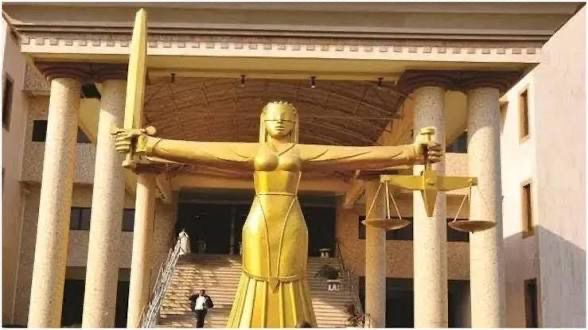
Appeal Court Halts Deregistration of ADC, Four Other Political Parties
By OZIOMA IWUH · 16/06/2026 5:51 PM · 2 min read
The Court of Appeal in Abuja has ordered a stay of execution of the Federal High Court judgment that directed the Independent National Electoral Commission (INEC) to deregister the African Democratic Congress (ADC) and four other political parties.
The ruling provides temporary relief for the affected parties pending the determination of substantive appeals challenging the decision.
In a unanimous judgment delivered by a three-member panel led by Justice A. B. Mohammed, the appellate court sharply criticised Justice Peter Lifu of the Federal High Court for proceeding with the judgment despite an earlier order directing him to halt further action in the matter.
The Court of Appeal described the action as a serious violation of judicial hierarchy and an affront to established legal procedures. According to the panel, courts must protect the integrity of the judicial system by ensuring that lower courts comply with directives issued by superior courts.
“The decision of the lower court to proceed with the judgment despite the express order of this court is a brazen violation of the hierarchy of courts and the Constitution,” the appellate court held.
Consequently, the court granted the application seeking a stay of execution and ordered that enforcement of the judgment be suspended.
The case stems from a suit filed by the National Forum of Former Legislators, which argued that the ADC, Action Peoples Party (APP), Action Alliance (AA), Accord Party (AP) and Zenith Labour Party (ZLP) failed to satisfy constitutional requirements necessary to maintain their registration.
Justice Lifu had ruled that the parties failed to meet electoral performance thresholds outlined under Section 225A of the Constitution and relevant provisions of the Electoral Act.
The judgment barred INEC from recognising the parties, accepting nominations from them, or allowing them to participate in future elections, including preparations for the 2027 general elections.
The plaintiffs had argued that the affected parties failed to secure the minimum electoral performance required under the law, including winning elective seats or achieving specified voting thresholds in elections.
However, with the Court of Appeal's latest decision, the status quo remains in place pending the final determination of the appeals.
The ruling is expected to have significant implications for Nigeria’s political landscape ahead of the 2027 general elections, particularly as political realignments continue to gather momentum across the country.
Written by
Ozioma Iwuh
SkyHigh NewsHub correspondent.