
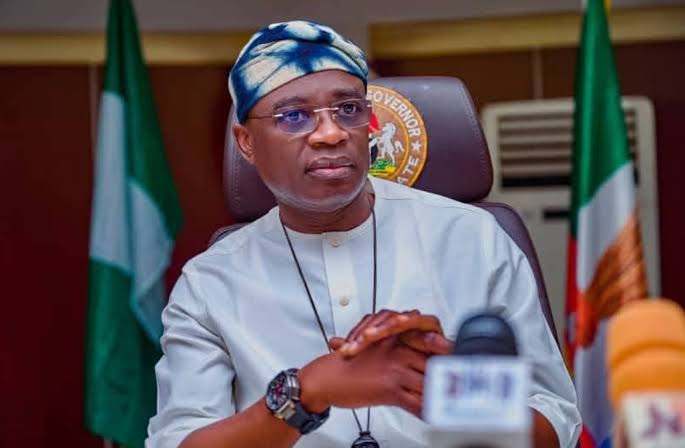
Alia Urges Governors to Embrace LG Autonomy, Says Benue’s Model Has Improved Grassroots Development
By OUR REPORTER · 08/07/2026 4:01 PM · 6 min read
Benue State Governor, Rev. Fr. Hyacinth Alia, has urged his colleagues across the country to fully implement local government autonomy, saying the policy has strengthened grassroots governance, improved accountability and reduced the administrative burden on state governments.
Alia said Benue had become a leading example in the implementation of local government financial autonomy, insisting that the policy had delivered measurable improvements in service delivery and development at the grassroots level.
The governor spoke on Wednesday during a media briefing organised by the Presidential Media Team at the State House, Abuja, where he highlighted the impact of his administration’s policies, ongoing economic reforms and security efforts in the state.
According to him, local government autonomy is a constitutional provision that must be respected, adding that his administration had ensured councils in Benue operate with financial independence.
“I encourage every other person who is not on this path to move into it as well, because it works. Benue State is the number one compliant on autonomy,” Alia said.
He explained that upon assuming office, he made it clear to elected local government chairmen that financial autonomy was non-negotiable because it was backed by law.
“Our local government autonomy is sacrosanct, and they have it. The judiciary also has its own autonomy. These are verifiable facts,” he said.
The governor dismissed claims that Benue had failed to grant autonomy to local governments, the legislature or the judiciary, describing such allegations as unfounded.
He said the independence granted to local councils had allowed them to identify and execute projects based on the needs of their communities rather than depending entirely on the state government.
According to him, several local governments in the state have declared infrastructure emergencies and commenced road rehabilitation projects using their allocations.
“Our local governments have also declared an emergency on road infrastructure and have turned a number of areas in their local government into work sites, and that is exciting,” he said.
Alia explained that the arrangement had reduced pressure on the state government by allowing him to focus more on supervision and policy direction rather than direct management of local government resources.
“It has already freed my mind on a lot of things. I don’t have as many headaches. All I do is supervision, get out there and cross-check,” he said.
He added that local government chairmen were now required to provide explanations on how funds received were utilised, improving transparency and accountability.
“If you say insecurity, itemise it. If you say farming, I need to understand that. Once you have the right people in those places, the rest flows very seamlessly,” he said.
Beyond local government autonomy, Governor Alia credited President Bola Tinubu’s economic reforms with improving the financial position of states, saying increased allocations from the Federation Account had enabled Benue to invest more in infrastructure, healthcare and agriculture.
He said improved revenue inflows had strengthened the state’s capacity to execute development projects and meet critical obligations.
“One of the most visible outcomes of the reforms has been the significant increase in allocations to states from the Federation Account. Benue State, like other sub-nationals, has witnessed improved fiscal inflows,” he said.
The governor recalled that when he assumed office, the state faced serious financial challenges, including salary and pension arrears.
He said some local governments had owed workers for several years, while pension obligations had accumulated over time.
“When I came in, paying salaries felt like heaven had come down to earth,” Alia said.
He said improved finances had enabled his administration to declare an infrastructure emergency, resulting in major road construction and rehabilitation projects across the state.
According to him, about 550 kilometres of roads have been rehabilitated, while more than 422 kilometres of new roads have been constructed, particularly in rural and suburban communities.
“If you go to the metropolis now, every place is turning to a worksite,” he said.
Alia also said his administration had upgraded primary healthcare centres across the state after years of neglect, adding that attention would now shift towards strengthening tertiary healthcare.
On industrial development, the governor disclosed that efforts were ongoing to revive abandoned state-owned businesses, including Food Basket Breweries, Bensona Juice and Concentrate Factory, and Taraku Mills.
“We have freed those assets, and we are just at the stage of signing with some big establishment to come take over,” he said.
He maintained that agriculture remained central to Benue’s economic recovery strategy, noting that the government had supported farmers through the distribution of fertilisers, herbicides, pesticides, subsidised tractors and increased mechanisation.
“Everything you talk about for the economic growth of the state must have agriculture. We have sustained this, and this is why there is a huge increase in produce in the state,” Alia said.
On security, the governor cautioned politicians against using insecurity challenges for political gains, saying such actions could worsen the situation and endanger lives.
He acknowledged that security challenges had not completely disappeared but maintained that significant progress had been recorded, with many displaced residents beginning to return to their communities.
“For those who do not understand the insecurity situation in the state, you may like to know from an authority that since 1999 we have been on the front lines of insecurity,” he said.
Alia said the current administration at both federal and state levels had made significant efforts towards restoring peace in affected areas.
“This is one single administration in the last three years, from the federal down to us at the state that has fought insecurity to a standstill. There are still anxieties and troubled areas, but relative peace has returned to the state,” he said.
The governor said the return of displaced farmers to their communities was one of the clearest signs of improving security conditions.
“We have people now who are going back home, back to the farm,” he said.
He disclosed that the state government had provided 120 Hilux patrol vehicles and more than 620 motorcycles to support security operations, alongside other interventions from the Federal Government.
Alia, however, urged politicians to avoid turning security issues into partisan debates.
“People have turned even matters of security into politics. When you do that, you’re playing with people’s lives. There must be a call for conscience,” he said.
The governor expressed optimism that the impact of ongoing economic reforms and government policies would become more visible as economic stability improves, urging residents to remain patient and supportive of ongoing development efforts.
Written by
Our Reporter
SkyHigh NewsHub correspondent.