
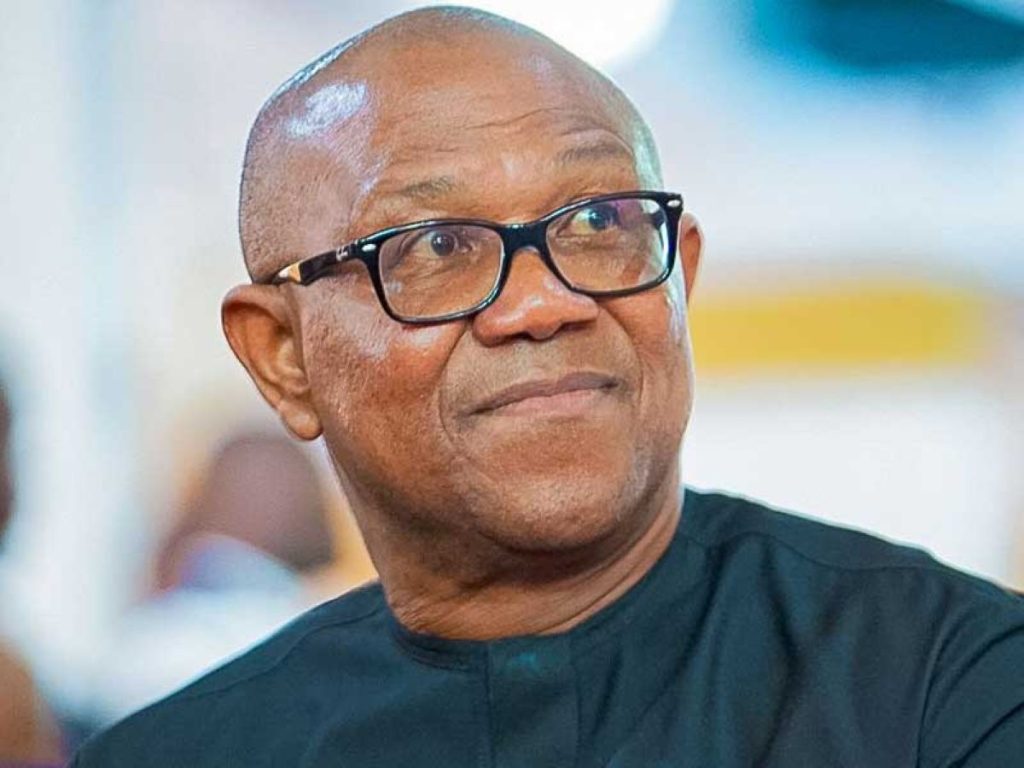
2027: Peter Obi Unveils Education Blueprint, Promises Healthcare, Human Capital Reforms To Drive Industrialisation
By OUR REPORTER · 01/07/2026 8:57 AM · 2 min read
The presidential candidate of the Nigeria Democratic Congress (NDC), Peter Obi, has unveiled another phase of his policy roadmap, outlining plans to reform Nigeria's education and healthcare sectors through massive investments in human capital development if elected.
In a statement released on Wednesday, July 1, 2026, Obi said that when he decided to contest for Nigeria's presidency, he pledged to place the country on the path of unity and national transformation.
He stated that over the coming weeks and months, he would continue to share details of what he described as a practical roadmap to curb abuse in government, improve the quality of life of Nigerians, and usher in an era of unity, peace, sustained progress, and prosperity.
According to him, his vision is anchored on unity, inclusion, social justice, equity, and the freedom of every Nigerian to pursue lawful aspirations.
Obi identified education and healthcare as the foundation of human capital development, describing robust human capital as the most important infrastructure for national progress.
"These are foundational areas that we must reform with energy and determination if we are to reap the demographic dividend of our youthful population," he said.
The NDC candidate disclosed that one of the first actions of his administration would be the establishment of a task force dedicated to drastically reducing the number of out-of-school children across the country.
He also pledged to place greater emphasis on Technical and Vocational Education and Training (TVET), saying it would support his administration's drive for large-scale industrialisation anchored on Nigeria's agricultural potential and value addition across industrial parks to be established in development zones across the country's geopolitical regions.
Obi said his government would improve funding and equipment for TVET institutions through partnerships involving government, the private sector, and social entrepreneurs, including faith-based educational institutions.
According to him, the initiative would create apprenticeship opportunities similar to Germany's dual education system, where students combine classroom education with workplace training.
He lamented the country's high unemployment rate despite the shortage of skilled labour, noting that many Nigerian entrepreneurs establish businesses abroad because they cannot find qualified workers at home.
"The situation in which unemployment remains high while Nigerian entrepreneurs establish businesses elsewhere because skilled labour is scarce must be confronted decisively," Obi stated.
He added that addressing the skills gap would be critical to transforming Nigeria from a consumption-driven economy into a production-driven one.
Obi further pledged to strengthen character and civic education, saying his administration would promote values that encourage trust, enterprise, leadership, and national unity as part of what he described as a tripartite approach to governance.
Written by
Our Reporter
SkyHigh NewsHub correspondent.