
2027: Peter Obi Pledges One-Term Presidency, Says Four Years Enough to Transform Nigeria
By DESTINY OLUWALE · 25/07/2026 12:27 PM · 6 min read
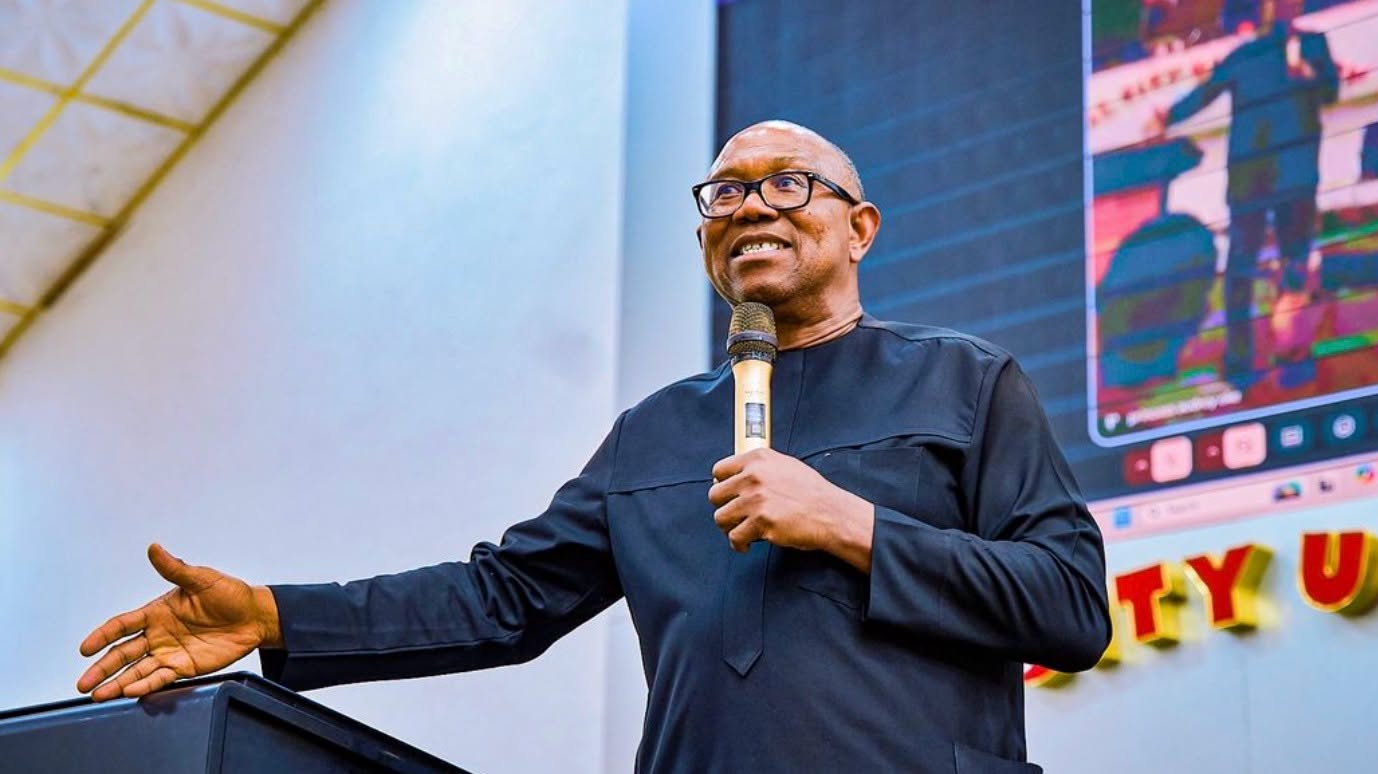
The presidential candidate of the Nigeria Democratic Congress (NDC), Peter Obi, has reiterated his commitment to serving only one four-year term if elected president in 2027, saying Nigeria can achieve significant transformation within that period.
Obi, who spoke during an extended conversation with a journalist, Onochie Anibeze, said he was prepared to sign a legally binding affidavit before a competent court to formalise his pledge if necessary.
“Yes, you can do a lot in four years. You can change Nigeria in four years. I am committed to serving a single term of four years,” Obi said.
According to him, the pledge is rooted in the need to rebuild public trust and promote national unity rather than extend his stay in office.
He said an agreement had already been reached on the matter and insisted that he would honour any commitment made to Nigerians.
“Nigeria’s greatest deficit today is the erosion of trust. We must rebuild confidence by showing that a leader’s word matters,” he said.
Obi added that he was willing to provide further assurances, including a legally binding affidavit, to demonstrate the seriousness of his commitment.
“If necessary, I am prepared to sign further undertakings, including a legally binding affidavit before a competent court affirming my commitment to one term,” he said.
He argued that his ambition was not to remain in power indefinitely but to use the period entrusted to him to restore security, boost production, strengthen economic stability and create shared prosperity.
On insecurity, Obi identified the protection of lives and property as the primary responsibility of government, arguing that the challenge cannot be defeated through military force alone.
He said a comprehensive security strategy would require stronger intelligence gathering, improved coordination among security agencies, modern technology and better welfare for security personnel.
He also linked insecurity to poverty, unemployment and hopelessness, saying government must address the underlying conditions that drive people towards criminality.
According to him, economic opportunities and social stability must form part of any sustainable strategy to tackle insecurity.
On the economy, Obi acknowledged the necessity of reforms but stressed that such policies must be carefully designed and implemented with consideration for their impact on ordinary Nigerians.
He said Nigeria must urgently shift from a consumption-driven economy to one based on production, with greater investment in agriculture, manufacturing and small businesses.
Obi said his economic approach would focus on reducing the cost of governance, eliminating waste, blocking revenue leakages and creating an environment where businesses can thrive.
He cited Bangladesh as an example of the possibilities available to Nigeria, noting that despite its smaller landmass and much higher population density, the Asian country produces significantly more rice than Nigeria.
The former Anambra State governor said Northern Nigeria, with its vast agricultural land, could become a major food-producing region if the right investments were made.
“If we secure the North, invest in modern agriculture, expand irrigation, improve rural infrastructure, and guarantee farmers access to finance and markets, there is no reason Northern Nigeria cannot become the food basket of Africa,” he said.
Obi also argued that agriculture should be developed beyond subsistence farming and positioned as an export-oriented industry capable of generating substantial foreign exchange.
“Oil is a diminishing asset, but productive land, properly managed, can create wealth for generations,” he said.
On the political realignments ahead of the 2027 election, Obi defended his movement across political platforms, arguing that political parties should be viewed as vehicles for governance rather than ends in themselves.
He said the priority should be assembling competent and patriotic Nigerians who are committed to addressing the country's challenges.
Obi also dismissed concerns over the criticism and opposition directed at him, saying anyone seeking to challenge an established system should expect resistance.
“Leadership is not about avoiding criticism. When you challenge a system, there will always be opposition. What matters is remaining focused, truthful, and committed to the people,” he said.
The NDC candidate urged Nigerians not to lose faith in the electoral process, despite widespread public frustration over the conduct of previous elections.
He described the 2027 election as an important opportunity for citizens to determine the country's political direction and called on voters to participate actively and protect their votes.
“The 2027 election will be a defining moment between Nigerians who desire a better future and those who have continued to hold the country back through failed leadership,” he said.
Obi also called for strict compliance with electoral laws, greater use of technology and genuine institutional independence to restore confidence in elections.
He expressed concerns over unresolved questions surrounding electronic transmission of results during the last general election, insisting that the will of voters must be respected.
“Democracy belongs to the people, and the people’s mandate must always be respected. Every legitimate vote must count,” he said.
On corruption, Obi argued that the character and integrity of political leaders play a decisive role in determining the level of corruption within government.
“When a president or governor is personally not corrupt, corruption in that government is already reduced significantly. Leadership sets the tone,” he said.
He advocated transparency, open procurement and responsible management of public funds as essential tools for tackling corruption.
Obi also raised concerns about Nigeria's debt profile, warning against borrowing to finance consumption.
He acknowledged that borrowing is a normal part of managing a modern economy but insisted that borrowed funds should be directed towards productive sectors capable of generating economic returns.
“The issue is not borrowing itself. Every serious economy borrows. The question is what you borrow for,” he said.
According to him, investments in education, healthcare, infrastructure, agriculture, manufacturing and technology can create wealth, while borrowing for consumption merely shifts today's burden to future generations.
Obi further identified education and healthcare as strategic investments rather than expenses, stressing that human capital development is central to Nigeria's long-term progress.
He said the country must create an environment where young Nigerians can acquire the skills and opportunities required to contribute meaningfully to the economy.
On Nigeria's position in the global economy, Obi said the country must build credible leadership, stable institutions and consistent policies capable of attracting investment.
He maintained that Nigeria possesses the human and natural resources required to succeed but has been held back by poor leadership.
“Nigerians should never lose hope. Our greatest resource is our people. What has held us back is leadership. If we get leadership right, every other challenge becomes easier to address,” he said.
Obi concluded by reaffirming his belief that a new Nigeria is possible, arguing that the country's future depends largely on the quality of leadership Nigerians choose and the willingness of citizens to participate actively in the democratic process.
Background
Obi's comments come amid increasing political realignments ahead of the 2027 general election, with opposition figures exploring coalition arrangements to challenge the ruling All Progressives Congress (APC). His renewed pledge to serve a single four-year term is expected to fuel debate over power rotation, national unity and constitutional questions surrounding presidential tenure.
Vanguard
Written by
Destiny Oluwale
SkyHigh NewsHub correspondent.